The local catch
Why Currituck Sound matters.
This brackish water separates the northern Outer Banks from mainland Currituck—and it’s where our owner works his crab pots.
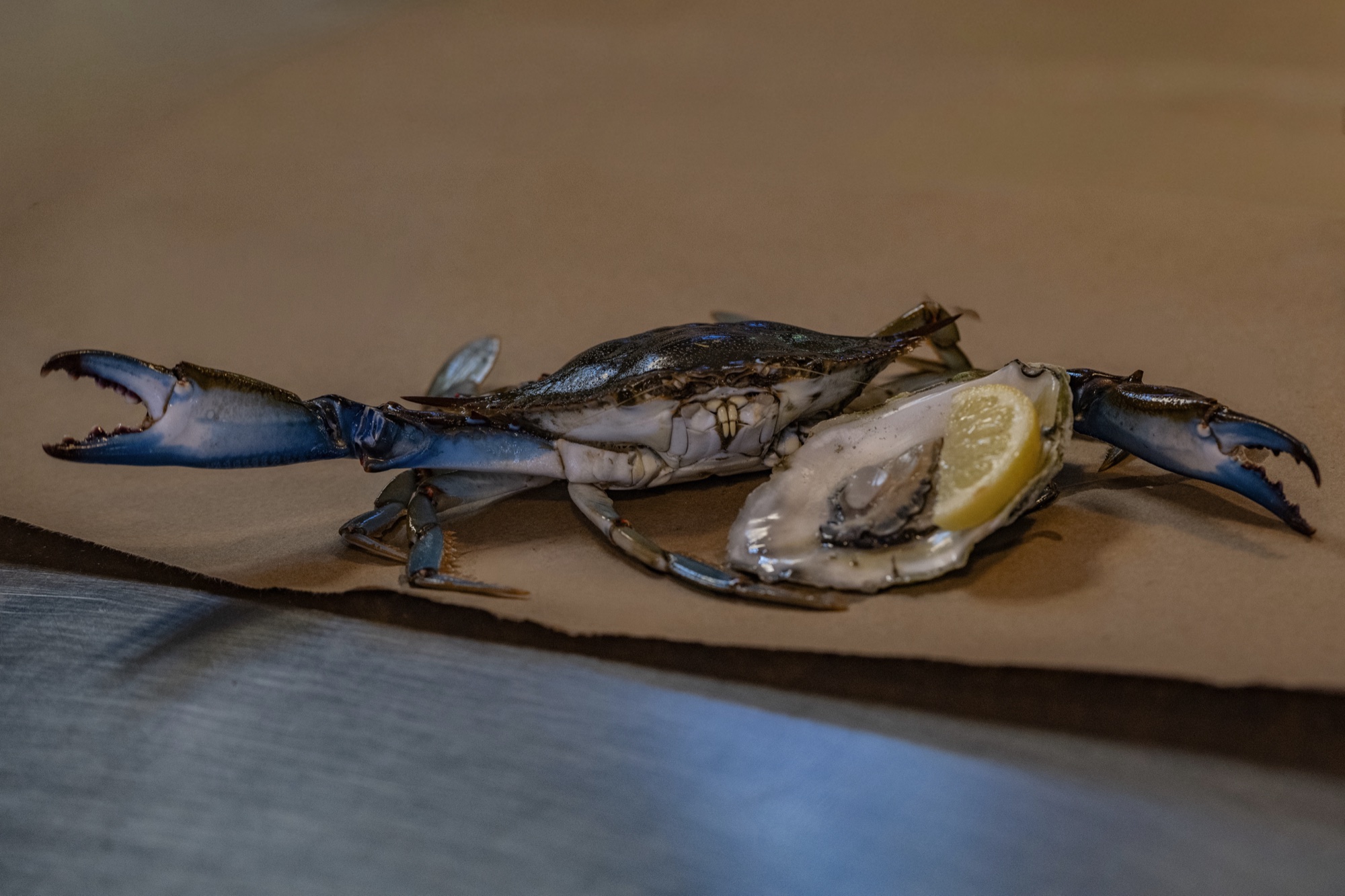
One Outer Banks table.
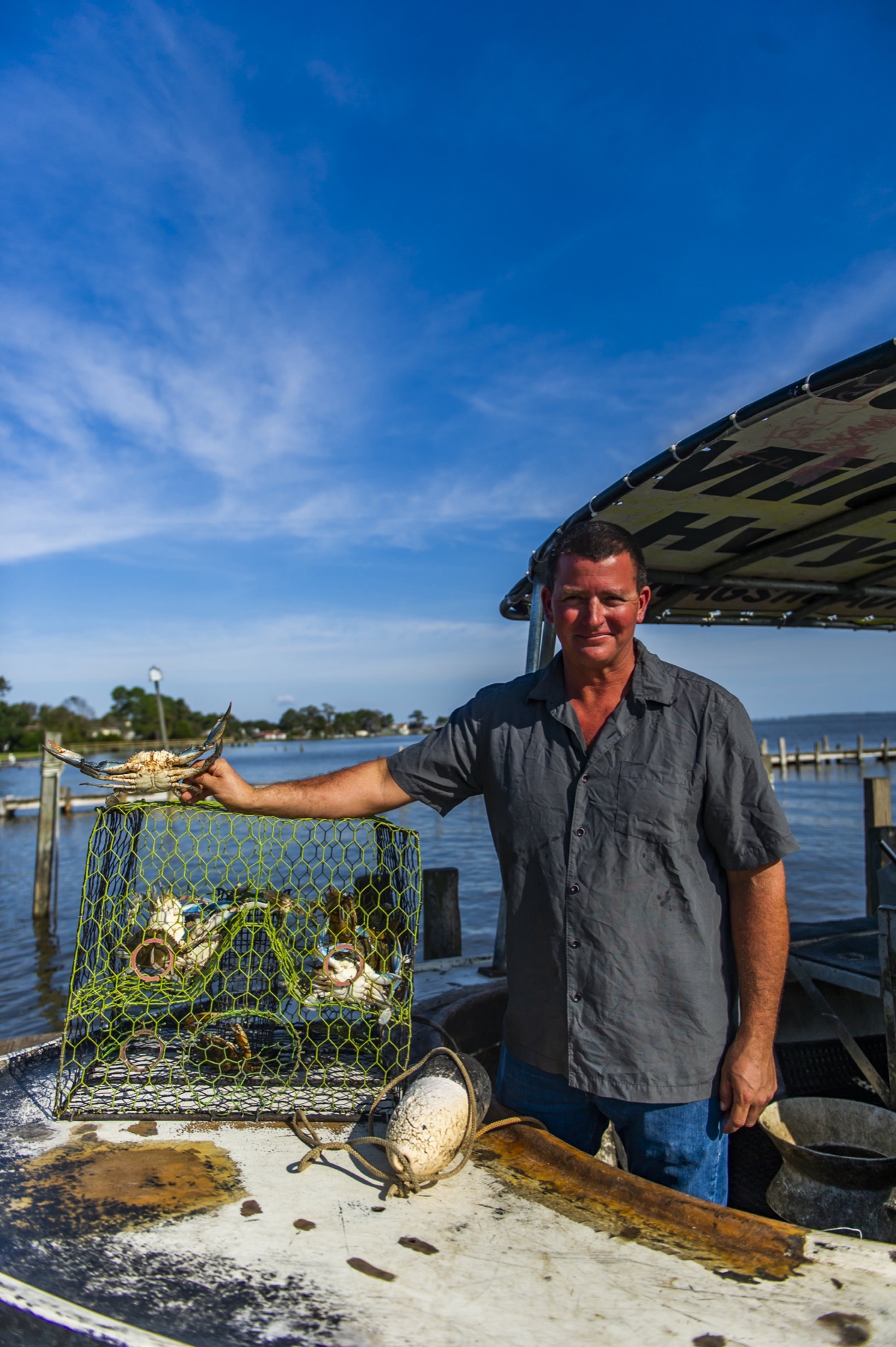
Hunter works the pots himself, bringing generations of local waterman knowledge from the sound to the restaurant.
A waterman's field guide
From the catch to the first crack.
Live or steamed
Take blue crabs home live, or let us steam them to order. Choose plain or seasoned. Availability and sizing change with the catch.
Hard or soft shell
Hard crabs have a fully formed shell. Soft-shell crabs are caught just after molting, during a short seasonal window.
How to order
Call for live availability and market pricing. Reserving one day ahead is recommended; payment or a card number is required to hold an order.
Call 252-449-2483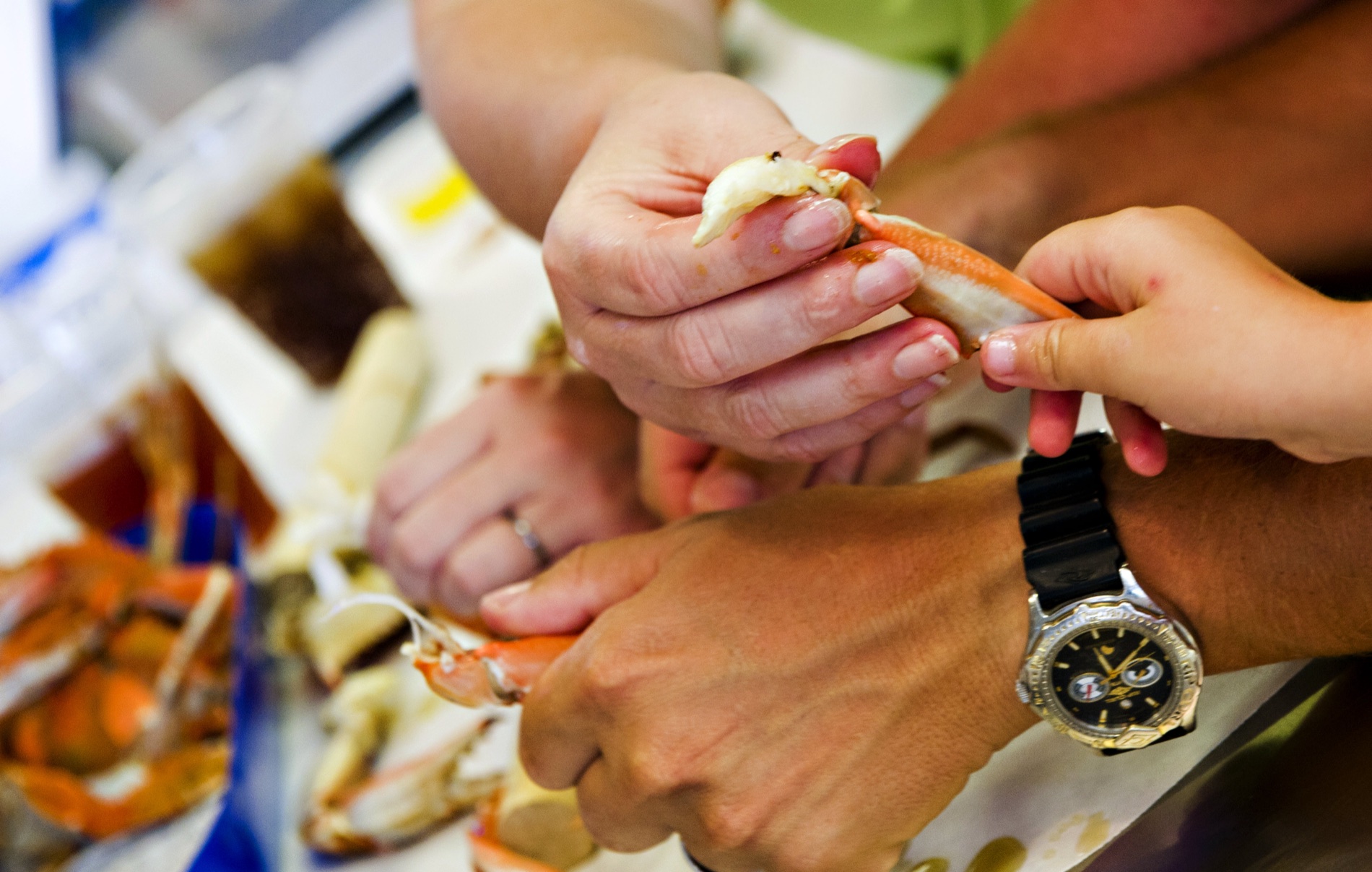
We’ll show you how
04Picking is part of the pleasure.
Lift the apron, remove the top shell and gills, split the body, then work through each chamber. Dining in? Ask us for a hands-on tutorial.